Saturday, May 4, 2013

Annotation


What is annotation?

                Annotation is a fancy word for taking notes, commenting or explaining.

Introduction to annotation by Leah Wade.


For more information:

 
The Little, Brown Handbook: Page 146 of the Twelfth Edition


The Last English 102 Blog


The Last English 102 Blog

          Wow! I can’t believe this semester is over. This semester was quite a challenge for me, in and out of class. I think balancing my classes, my work as elementary librarian as well as my extra duties this year, and my very busy family has been my biggest challenge this year. I have to say, it was all worth it. I enjoyed reading my class mates blogs. My only regret is that I didn’t have the time to read them all. Sorry classmates. I have learned a lot and strengthened what I already knew. English 102 is a great course to prepare you for a professional career.
By Werner100359 (Own work) [CC0], via Wikimedia Commons
Diary of a Wimpy Kid, Rodrick Rules By Jeff Kinney is one of the most popular books for young readers.

          Laura Cline has introduced me to writing techniques, technology, and taught me to analyze my reading. The handouts and power points provided throughout the class has helped strengthen the lessons in writing technique, such as; annotating and high lighting, plotting, creating a thesis, writing, and revising. Technology skills, like power points and blogging, were new to me, but I feel comfortable using them now. I love to read, but I didn’t always take the time to analyze what I read. It was like consuming a pizza without savoring the taste. Laura Cline is a fantastic and enthusiastic professor, teaching her students to be creative and professional.

          My goal towards being a teacher weighs heavily on how well I write and communicate. I may one day have to teach the writing process to my own students. The lessons I learned in English 102 were clear and easy to follow. I enjoyed reading and analyzing Bartleby, The Scrivener and White Noise. The stories were thought provoking, as well as, entertaining. I seriously hated reading A Modest Proposal. I didn’t have a stomach for it, even if it was satirical. I had difficulty finding a thesis, then writing to prove it. The best part of A Modest Proposal was the research I did on Ireland. I want to say that my writing has improved, but I am still making a lot of writing errors. Hopefully, with more practice, I will become a better writer.

        The most challenging aspect of English 102 is the video blogging. Our first assignment, our introduction, terrified me. Retake, after retake, and the perfectionist in me was still not satisfied. My fear of our last assignment, the final presentation, is gnawing at me. I am close to chickening out and doing a power point. A power point could be more creative and I wouldn’t have to worry about stumbling over words. I feel I must end the class the way I began it, by facing my fears. We grow exponentially, as person, when you challenge yourself. After all, I want to be a teacher, I have to get over my fear of public speaking.

Saturday, April 27, 2013

Modern Technology In English 102


Modern Technology in English 102

     Modern technology is an unfathomable force that is quickly sweeping the nation. During the 39 years of my life, I have seen advancements in telephones, televisions, and computers. I love telling my children the story of how we had to use pay phones, or use rotary dialing on a phone. Watching Dukes of Hazard on a black and white 32 inch television is nothing compared to watching Fast and The Furious on a 46 inch HD flat screen. My first computer was a Tandy 64, I had calculators that were smarter, what a disappointment. Kids today do not appreciate the advancement technology has to offer, because they never knew life without it.
By Thomas R Machnitzki (thomas@machnitzki.com) (Own work) [GFDL (http://www.gnu.org/copyleft/fdl.html) or CC-BY-3.0 (http://creativecommons.org/licenses/by/3.0)], via Wikimedia Commons
By Stefan-Xp (Own work) [GFDL (http://www.gnu.org/copyleft/fdl.html) or CC-BY-SA-3.0 (http://creativecommons.org/licenses/by-sa/3.0/)], via Wikimedia Commons
 

     Going back to college was a dream for me for the last 20 years. With technology, online colleges were introduced, giving stay at home moms, or full time workers a chance to higher our education. Computers classes lets students work at their pace, as long as they’re dedicated and stay on task. After waiting so long to go back, I thought I would be way behind in education and technology advancements. I am happy to say I am not too far behind the times, and I am convinced going back to college was the best decision I have ever made.

     Online college does lack the sense of camaraderie that a classroom has with its students. Although I do enjoy the blogs I share with my fellow classmates, I don’t get a chance to know them socially. I like watching or interacting with people to get to know them better. The more I know my fellow classmates or teachers, the more I know what they expect from me, or I from them.

     Learning different technology techniques this year in English 102 will be very beneficial in my future classes as well as my current occupation as my schools elementary librarian. I really enjoy blogging, even if that was very new and strange to me at first. Creating a slide -show is easy for students in my school, but it was difficult when it is your first time and the program doesn’t want to cooperate. The assignment I disliked the most was video blogging. I am working on my shyness, but it’s still very hard to put myself out there in a video. The more you use technology the more familiar you will become with it. I plan on using this summer to practice video blogging and slide- shows, to make myself more comfortable with the technology.
     My goal is to become a great teach and to do that I need to expand my education to add technology into it. Children who use technology in their education learn faster and have more fun while doing it. When I was teaching my kids during the summer I would set them on the computer for 30 minutes to play educational games, such as Where in the World is Carmen Sandiego, or Freddie Fish. So many great fun educational games to play, and kids don’t realize they are learning. With the advancement in technology our schools are challenged to teach students to meet the needs technology has created.

Sunday, April 21, 2013

Revise and Rewrite

Revise and Rewrite
 
 
         I love to write, it isn't always easy, but the finished product makes me feel proud of what I have accomplished. When writing my papers, I go over every sentence multiple times and I reread what I wrote aloud to make sure that the words flow. When I am completely done I torture my family to catch the mistakes that I have missed. They are good at finding my grammatical errors. I hope one day that I can write a paper without silly tense mistakes or possessive blunders. I also used the Purdue Owl Writing Lab  to help me my revisions. The insight from this website is easy to understand and use. Another one of my favorite writing tools is The Little, Brown Handbook.  This was the first time I used the online tutor. It was really very easy to use, as well as, quick in responding. The tutor helped me make changes that my family and I missed.  Revising helps to eliminate the errors that you make now as well as teach you how to avoid them in other papers. I know the more I write and revise the better writer I will become. I am really hoping my paper receives a good grade. 
 
Albert Anker [Public domain], via Wikimedia Commons


Sunday, April 7, 2013

Losing Religion


Losing Religion
By Skin - ubx from Glasgow (Blairs 42  Uploaded by Princess Mérida) [CC-BY-2.0 (http://creativecommons.org/licenses/by/2.0)], via Wikimedia Commons


“One nation under God” was added to The Pledge Of The United States to symbolize unity in faith as well as loyalty to our nation. The government uses “under God” to represent that the President was the highest power in office but it was nothing compared that of God, or Gods depending on what religion you practice. Faith and religion has been slowly fazed out of our government, schools and our American society. White Noise is a satirical novel about Jack Gladney, a Hitler studies professor, and his blended families experience during an “airborne toxic event”.  Don DeLillo uses Jack as the stories narrator as well as an example of the typical American families’ father trying to do his best raising his children with his fifth wife Babette. Jack’s omnipresent fear of death rules his life endeavors as well as his emotions. Don DeLillo uses satire in White Noise to show how absence of religion can create loneliness, a longing for acceptance, fear, hatred, ruthlessness, diminished morality, as well as Jack’s ultimate fear of dying.
By Ratomir Wilkowski, www.RKP.org.pl (Own work) [GFDL (http://www.gnu.org/copyleft/fdl.html) or CC-BY-SA-3.0 (http://creativecommons.org/licenses/by-sa/3.0/)], via Wikimedia Commons
 

Friday, March 29, 2013

Shop 'Till You Drop

      When reading White Noise by Don DeLillo you can easily recognize the main concepts of the story. Fear of death, Consumerism, and trust (family, as well as, governmental) have been the most profound examples of motifs. The story is as true to American life style then, as it is now, if not more.
      The critical essay, "The (Super)Marketplace Of Images: Television as Unmediated Mediation In DeLillos's White Noise" written by John N. Duvall, in the 1990's, gave evidence supporting that commercialism and consumerism are two ways people indulge themselves in hopes of striving off their fear of death. The more we purchase and eat, the more powerful and bigger we feel we are. If we are this high on life, nothing can harm us.
      The article also emphasized the power media has over Jack Gladney and his family, not to mention the rest of the world. "The awe and terror of this man-made disaster can only be validated through the electrical media" (Duvall, 436) News doesn't just relate what happens around the world, but gives a guide on what is normal and how we should react in situations. Unfortunately, with competition for ratings, Duvall believes the "network and cable news programs operate under capitalism's demand to make it a newer form of entertainment"(Duvall,436). This modern form of news begins to desensitize the public, leaving the viewers wanting more, but not teaching us to handle our own catastrophes.
     John N. Duvall likened DeLillo's White Noise as a predecessor toward fascism. "Each element of Jack's life world mirrors back to him a postmodern, centralized totalitarianism that this professional student of Hitler in unable to read"(Duvall, 433). Jack and his family are so absorbed in television and marketing that their free will is spent in feeding the need to feel apart of America. Everyone wants to be apart of something that is bigger than themselves, it makes them feel like they are not alone.
     I was surprised that Duvall considered Murray Siskind "the true villain of White Noise"(Duvall 443). I admit, while reading White Noise, I would wonder how Jack's only friend and confidant could be so blatantly flirting with Babette, then give him such really bad advise as to go kill somebody. Murray says, "think what it's like to be a killer. think how exciting it is, in theory, to kill a person in direct confrontation. If he dies, you cannot."(DeLillo, 290)
     I think this is a good source for my third essay, because it helped me think beyond what I read in White Noise. The article helped me understand some of the symbolisms that I didn't pick up on at first. Know I have a better understanding of what I need to look for and hopefully will be able to put into coherent words. The main concept I can take away from this article is that we all watch, or listen to, too much television. I made it a point to turn the television off while writing this blog. I will confess I miss my white noise.


DeLillo, Don  White Noise, The Viking Critical Library, 1998

Duvall, John N. "The (Super)Marketplace Of Images: Television as Unmediated Mediation In                         DeLillos's White Noise" The Viking Critical Library, 1998

Saturday, March 9, 2013


Dear Laura Cline,

            I want to thank you for the opportunity to broaden my reading and writing skills this year. I was never very good with my English writing skills and rules, but I enjoy writing. When I was in high school I wanted to be a writer, but sad to say I never followed through. My favorite class was creative writing, we did analysis of television shows and song lyrics. I had no idea that was what we were doing then, it was just fun breaking the words down and writing our thoughts and opinions about them.

            Writing a blog and doing the introduction video was difficult for me. I have been working very hard the last couple of years at controlling my shyness and social anxieties. I usually keep my thoughts and opinions to myself, then again it was nice to learn a way to express my feelings through words. The video blog is still a challenge, but I never give up in defeat. I am grateful for the chance to step out of my comfort zone and learn new ways to communicate my opinions.

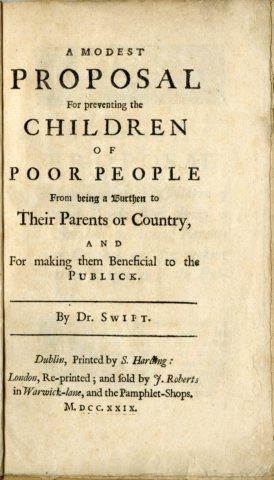
            “A Modest Proposal” by Jonathan Swift was definitely the hardest assignment I have had this year. It took several attempts to completely read the proposal: My stomach couldn’t handle the contents. I knew it was supposed to be satirical, but it didn’t change the descriptive content that I imagined. I may been affected more because I am a mother, soon to be grandmother, and an elementary school librarian. I see kids all the time, and the thought of the unspeakable disgusted me. Writing my essay, I tried to stay away from the main concept of cannibalism, which made it easier to come up with a thesis.  

            I am a perfectionist.  My writing has too many grammatical errors, that I have trouble finding on my own. I hope that the more I write, the better the writer I will become. My goal for the second half of English 102 is to continue working at improving my sentences. I am looking forward to reading White Noise by Don DeLillo. I just hope it doesn’t contain cannibalism. Thank you for your constructive criticism, challenging and sometimes perplexing analysis assignments, and instructing us to be the best writers than we can be.

Your Appreciative Student,

Leah Wade

Saturday, March 2, 2013


A Drastic Proposal


            The imagery in “A Modest Proposal” is represented as harsh, barren, and undeniably bleak.  Jonathan Swift describes “the streets, the roads, and cabin doors, crowded with beggars…” (Swift, 1) as he introduces his “modest” proposal to end the strife that embodies 1729 Ireland. The proverb “drastic times, calls for drastic measures” comes to mind as Swifts satirical proposition to solve the problematic over-population, and poverty by consuming the horde of infants and children that seem to be loitering the country.  The unconceivable notion that cannibalism could be ordained to satisfy the political, religious, and economical unrest that occupies Ireland is outrageous. Swift attempts to shock and shame his readers, land owners, and law makers into acknowledging Ireland’s main grievance, separation on state, rather than the destitute, famished, and apartheid under the control of the British Monarchy.
Published on Jun 6, 2012
A short production on life in Ireland in 1729
Meow Smithers to YouTube


Saturday, February 23, 2013

A Brazen Proposal

By Jonathan Swift [Public domain], via Wikimedia Commons

A Brazen Proposal

            Jonathan Swifts’A Modest Proposal” was anything but modest. The story was revolting, nauseating, and deplorable: a wretched manifesto by a man who holds nothing back.  Swift’s proposal was meant to shock and awe his audience, but I found it very difficult to read past his initial proposal. Swifts attempts and shaming the Protestant land owners and the English Gentry living in Ireland into treating their employees with dignity, thoughtfulness, and compassion.  “A Modest Proposal” is excessively satirical; readers that are not familiar with him would think that maybe he was serious.
Charles Jervas [Public domain or Public domain], via Wikimedia Commons
 
            Jonathon Swift describes 1729 Ireland as a time filled with famine, over population, prejudices, and Ireland being in a state of unrest due to England’s occupation. Swift describes women, who cannot work, begging on the streets. Children growing up to be criminals, selling themselves to slavery, or joining a foreign army to survive the harshness of the difficult times. Swift’s proposal is to take children, at the age of a year old, from their mother and raising them as if they were cattle to feed the rich and prosperous. He believes his idea would prevent hunger, overpopulation, control Catholic inhabitants and voluntary abortions. If the children were delicacies then they would be fed, valued, and treated as precious commodities. Swift also said that women would be respected, and coveted, because they are capable of baring children.
Sébastien Bourdon [Public domain], via Wikimedia Commons
 
            Swifts tone was serious and contemplating throughout his proposal. His purpose was to satirically appall the Irish society into making a change in the treatment of the poor, starving citizens. As well as, opening the eyes of the rich landowners who are mistreating their highly needed workers. This solution may seem logical to the Jeffery Dahmer populous, but we are not cattle. We are intelligent, caring, thoughtful, human beings and shouldn’t be treated in such a heinous, cannibalistic fashion. Swift offers extensive evidence about why his proposal would be beneficial to the Irish plight of 1729. The paper is so thoroughly written with explanation, descriptions, and arguments that it would be difficult for some people to know he meant the paper to be satirical. I began to wonder if “A modest Proposal” led to Dahmers obsession with cannibalism. I feel mortified and sad that Ireland was such in a state that Swift had to write “A Modest Proposal” to expose the heartless English, and ruthless Landowners and guilt them into submission.

Friday, February 15, 2013

Find New Roads

Find New Roads

 
Find New Roads Anthem :90 HD | Chevy Commercials | Chevrolet
Published on Feb 10, 2013
Introducing the new Chevrolet. With the best lineup of vehicles ever, we believe ingenuity can do the impossible. So why just go from A to B when imagination can take you everywhere?

     Car advertisements usually appeal to either families, adventurists, high class socialites or vehicle enthusiasts; until now that is. Chevrolet created a highly innovated commercial that would appeal to all audiences while keeping their message as simple as three words: Find new roads. Be true to who you are and what you like. The commercial is funny, lovable, edgy, high tech, and futuristically innovative; as well as retrospective, romantic and classy. My personal favorite collage was the fast pace chase through a dark New York City that introduces the 2014 Stingray Corvette. We all have different tastes, life styles, and economical needs; so finding a commercial that can incorporate a variety scenarios that will attract perspective buyers is ingenious. It doesn't hurt to dream, especially if Chevrolet fuels those dreams.


Saturday, February 9, 2013

Bartleby

Bartleby, the 19th Century Martyr
 
 
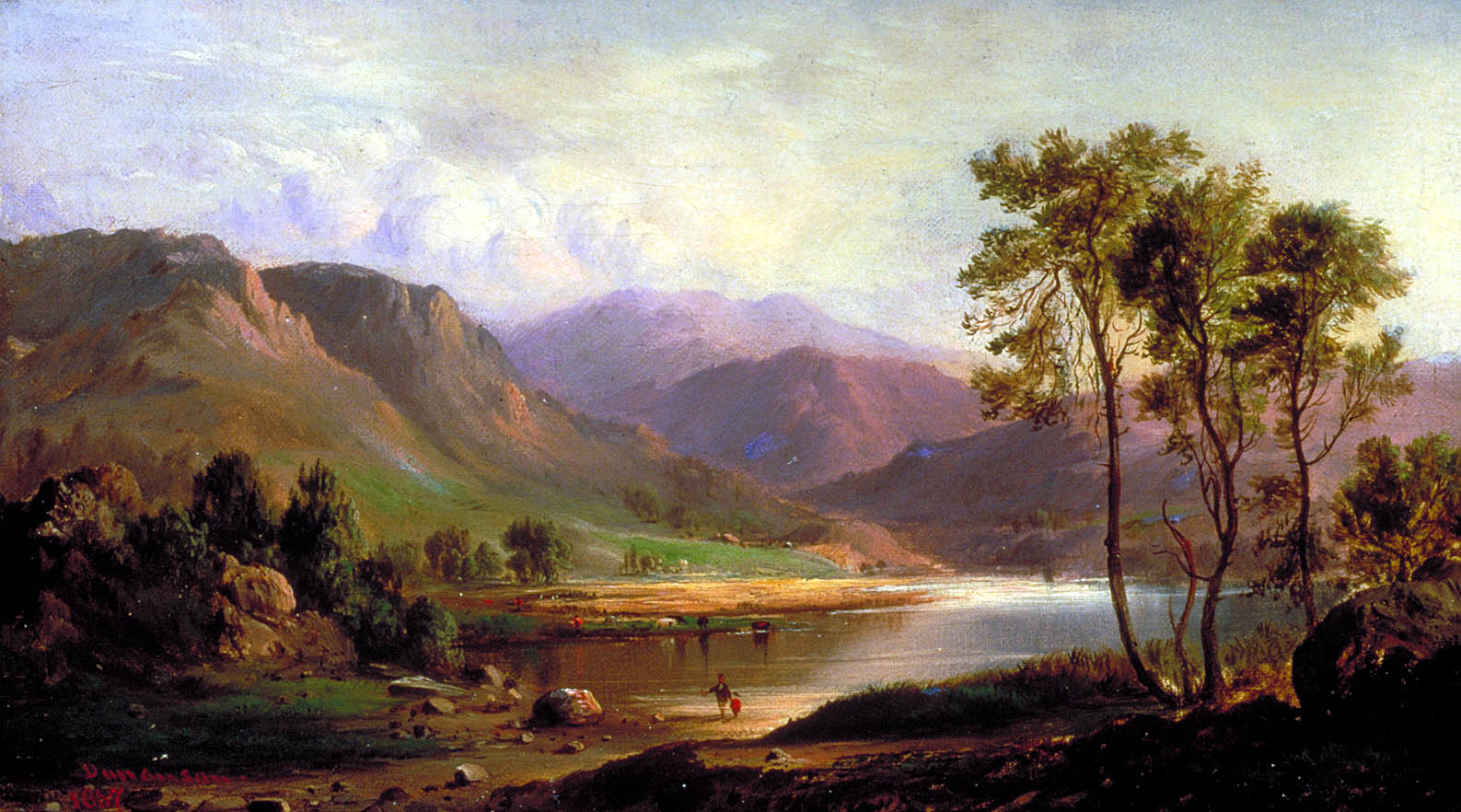
Robert S. Duncanson [Public domain], via Wikimedia Commons


     Herman Melville uses Bartleby to expose the need for changes Christian charity in the 19th century American society. That time of the history is defined by the romantic art, novels and poems. The unseemly side was hidden from view and not talked about. The accounts of charity were that handing over a few dollars to, hopefully, be rid of the needy. I believe Melville was attempting to shame society, and bring about change through exposure. Melvilles' lawyer-narrator personifies the wealthy 19th century, while Bartleby is the dark, hopelessness of the poor and sick. The narrator gains his humanity, as Bartleby loses his, in a variation of the circle of life. I believe even today we can use Bartleby, the Scrivener as an example of how to keep humanity alive.

Sunday, February 3, 2013

To Prefer or Not

To Prefer or Not

 "Imagine my surprise, nay, my consternation, when without moving from his privacy, Bartleby in a singularly mild, firm voice, replied, "I would prefer not to."(21)
 
     "I would prefer not to" (21) replies Bartleby to his employer after being asked to examine a small paper. His employer, the narrator of Bartleby, the Scrivener written By Herman Melville, was shocked when his employee of only three days refused to do what was asked of him. There is a time when we all feel like telling our employers "we prefer not to", but often we find ourselves doing what we don't like to do to keep in good standings with our boss. We often will find ourselves overworked, under- payed, and exasperated. The thought of standing up and verbalizing are thoughts, without the fear of losing our positions, would be liberating. I would prefer not to write this essay, but if I didn't I would fail and failure is not an option.We all have a choice, but there are consequence's of our decisions. Bartleby may have the power to opt out, but he was taking a great risk in doing so.  Bartleby was lucky that his employer was too stunned with his refusal to fire him.
     The phrase "I would prefer not to" is used through out the story to show Bartlby's reluctance in everything that is asked of him. His preference in; reading the copies, then writing them, leaving the office, in eating, finally his preference in living; has defined his existence. The narrator and his other employees began to use the phrase without even realizing it. Living your life without preference is not living at all. Bartleby is a great example of a person who really couldn't care less about anything.
The employer tried to help Bartleby find a new job, a new residence, and secure a good meal for him; but in the end it was Bartleby's choice and he preferred not to.
 
Ralf Roletschek [GFDL (http://www.gnu.org/copyleft/fdl.html) or CC-BY-SA-3.0 (http://creativecommons.org/licenses/by-sa/3.0/)], via Wikimedia Commons


Friday, January 25, 2013

Summary v. Analysis

Summary v. Analysis

What is a Summary?

     A summary is a brief description of a movie, book, story, or poem. A summary answers the basic questions; what, when, where, who, and how. It can be used to help organize thoughts, plots, characters, and time lines. Summarizing helps you to comprehend the text or film you are reading or watching. When you summarize you are basically reducing the context to reveal the basic meaning and plot significance.
 
Example of a Summary...
 
    Stranded in a life boat, sharing limited space with a vicious Bengal tiger, a young man must come to terms with the loss of his beloved family and find the will to survive. "Life of Pi", written by Yann Martel, tells the drama of a 16 year old Piscine Patel as he and his family move from India to Canada. Mid-way through their ocean voyage the ship that carried the Patel family and various animals from their zoo began to sink. Pi and a large Bengal tiger named Richard Parker found themselves to be the only survivors lost at sea in a life boat. Through faith and desperation Pi trains the tiger and soon they learn to cohabitate. After being washing up on the shore of Mexico, Richard Parker and Pi go their separate ways. Pi is then saved by the locals, and questioned by the authorities about the sinking of the ship. The authorities don't believe Pi's fantastical tale and must placate them with a horror story that resembles the previous stories with the key actors that are human. Piscine Patel then makes his way to his final destination in Canada.


What is Analysis?

     Analysis is a summary broken down into it's individual parts. The characters are dissected, the plots explored,  and the themes are identified for further research. Questions are pondered, while the answers are turned into arguments. It isn't necessary to have the right answer, just that you have enough evidence to prove your point. To truly understand and critically assimilate what you have read you must analyze your text. Appreciation comes with knowledge and understanding.
 
Example of Analysis...

    Piscene Patel, the main character in "Life of Pi" written by Yann Martel, is a very strong in his his faith. Actually, I should say faiths because he actively practices Hinduism, Muslim, and Christianity. His faiths are tested when he is shipwrecked with a 450 pound Bengal tiger by the name of Richard Parker. After 227 days lost at sea; near death from dehydration, starvation, and the the constant threat of the tigers jaws or the circling fins of the ever present sharks; his survival is definitely a miracle. Faith of his Gods gave Pi Patel the sure will power to live, even when he has already lost everything.


A little Summary in your Analysis..

     It may be important to add a little story summary in the opening paragraph. It gives the reader a foundation to understand what your analysis is about. Your other paragraphs should include your arguments and the evidence that support them. Then your conclusion will finish leaving your reader actively questioning whether or not they agree with you.


Saturday, January 19, 2013

Introduction Video

By Bradley Wade
 

Please call me Leah.

Smiling is infectious,
You can catch it like the flu.
Someone smiled at me today,
And I started too.
-Author Unknown


Friday, January 18, 2013


What Is Makes A Good Reader?

By Ryan Franklin from Gilbert, AZ, US of A (Old Les Mis  Uploaded by guillom) [CC-BY-2.0
I never thought about what makes us better readers.  As an elementary librarian I teach my students to reread books and stories so they’re not only familiar with the words but can also comprehend the idea of the story.  After reading, “Good Readers and Good Writers”, by Vladimir Nabokov, I have a better understanding on what makes us better readers.  A good reader knows how to use his imagination, has memory and dictionary to understand text, and has artistic sense.  It’s not the repetition I was teaching the students that made them better readers, but learning new words and memorizing the story, and children have a natural ability to use their imagination. I do agree with Nabokov’s definition of a good reader.  The children who struggle the most with reading are the ones that have a hard time picturing purple dragons, or are so fixated on the here and now they can’t let their minds wonder in a good book.

Norbokov’s points of view of a writer- Storyteller, teacher, and enchanter-is what I believe makes a story or book exceptional. Every year I read my students, “The Giving Tree” by Shel Silverstein.  The story is one of my favorites and has quickly become a hit in our little school.  Children learn to imagine a living tree, complete with feelings and love for the main character.  They learn of sacrifice and unconditional love and the happiness when it is returned. The story is clearly written with meanings and enchants every child who lays their eyes upon the pages.  The simple black and white drawings ignite with color as the child’s imagination takes over.  I have to say that the characteristics of a good reader would have to be imagination, the want to learn new words, and the patience to reread stories to get the full affect and meaning of the story.

I love to read. I reread the stories I love the most. When I read I don’t see words flying by; I see pictures, action, colors and smells. I have feeling; love, hate, fear, desperation, any emotion the author is trying to portray. I look to books like most people look to film. I want the adventure, drama, comedy, the love story. I have trouble at times watching a movie after I read a book; the scenes or characters don’t always match my imagination. Some authors I can’t get past the first chapter because they don’t quench my thirst for a good story. I want to say that I am a good reader. I enjoy reading. I hope one day I will be a good writer as well.