Saturday, February 23, 2013

A Brazen Proposal

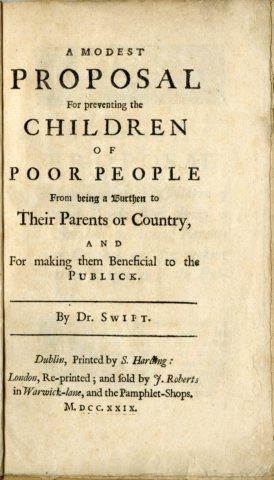
By Jonathan Swift [Public domain], via Wikimedia Commons

A Brazen Proposal

            Jonathan Swifts’A Modest Proposal” was anything but modest. The story was revolting, nauseating, and deplorable: a wretched manifesto by a man who holds nothing back.  Swift’s proposal was meant to shock and awe his audience, but I found it very difficult to read past his initial proposal. Swifts attempts and shaming the Protestant land owners and the English Gentry living in Ireland into treating their employees with dignity, thoughtfulness, and compassion.  “A Modest Proposal” is excessively satirical; readers that are not familiar with him would think that maybe he was serious.

Charles Jervas [Public domain or Public domain], via Wikimedia Commons
 
            Jonathon Swift describes 1729 Ireland as a time filled with famine, over population, prejudices, and Ireland being in a state of unrest due to England’s occupation. Swift describes women, who cannot work, begging on the streets. Children growing up to be criminals, selling themselves to slavery, or joining a foreign army to survive the harshness of the difficult times. Swift’s proposal is to take children, at the age of a year old, from their mother and raising them as if they were cattle to feed the rich and prosperous. He believes his idea would prevent hunger, overpopulation, control Catholic inhabitants and voluntary abortions. If the children were delicacies then they would be fed, valued, and treated as precious commodities. Swift also said that women would be respected, and coveted, because they are capable of baring children.
Sébastien Bourdon [Public domain], via Wikimedia Commons
 
            Swifts tone was serious and contemplating throughout his proposal. His purpose was to satirically appall the Irish society into making a change in the treatment of the poor, starving citizens. As well as, opening the eyes of the rich landowners who are mistreating their highly needed workers. This solution may seem logical to the Jeffery Dahmer populous, but we are not cattle. We are intelligent, caring, thoughtful, human beings and shouldn’t be treated in such a heinous, cannibalistic fashion. Swift offers extensive evidence about why his proposal would be beneficial to the Irish plight of 1729. The paper is so thoroughly written with explanation, descriptions, and arguments that it would be difficult for some people to know he meant the paper to be satirical. I began to wonder if “A modest Proposal” led to Dahmers obsession with cannibalism. I feel mortified and sad that Ireland was such in a state that Swift had to write “A Modest Proposal” to expose the heartless English, and ruthless Landowners and guilt them into submission.

Friday, February 15, 2013

Find New Roads

Find New Roads

 
Find New Roads Anthem :90 HD | Chevy Commercials | Chevrolet
Published on Feb 10, 2013
Introducing the new Chevrolet. With the best lineup of vehicles ever, we believe ingenuity can do the impossible. So why just go from A to B when imagination can take you everywhere?

     Car advertisements usually appeal to either families, adventurists, high class socialites or vehicle enthusiasts; until now that is. Chevrolet created a highly innovated commercial that would appeal to all audiences while keeping their message as simple as three words: Find new roads. Be true to who you are and what you like. The commercial is funny, lovable, edgy, high tech, and futuristically innovative; as well as retrospective, romantic and classy. My personal favorite collage was the fast pace chase through a dark New York City that introduces the 2014 Stingray Corvette. We all have different tastes, life styles, and economical needs; so finding a commercial that can incorporate a variety scenarios that will attract perspective buyers is ingenious. It doesn't hurt to dream, especially if Chevrolet fuels those dreams.


Saturday, February 9, 2013

Bartleby

Bartleby, the 19th Century Martyr
 
 
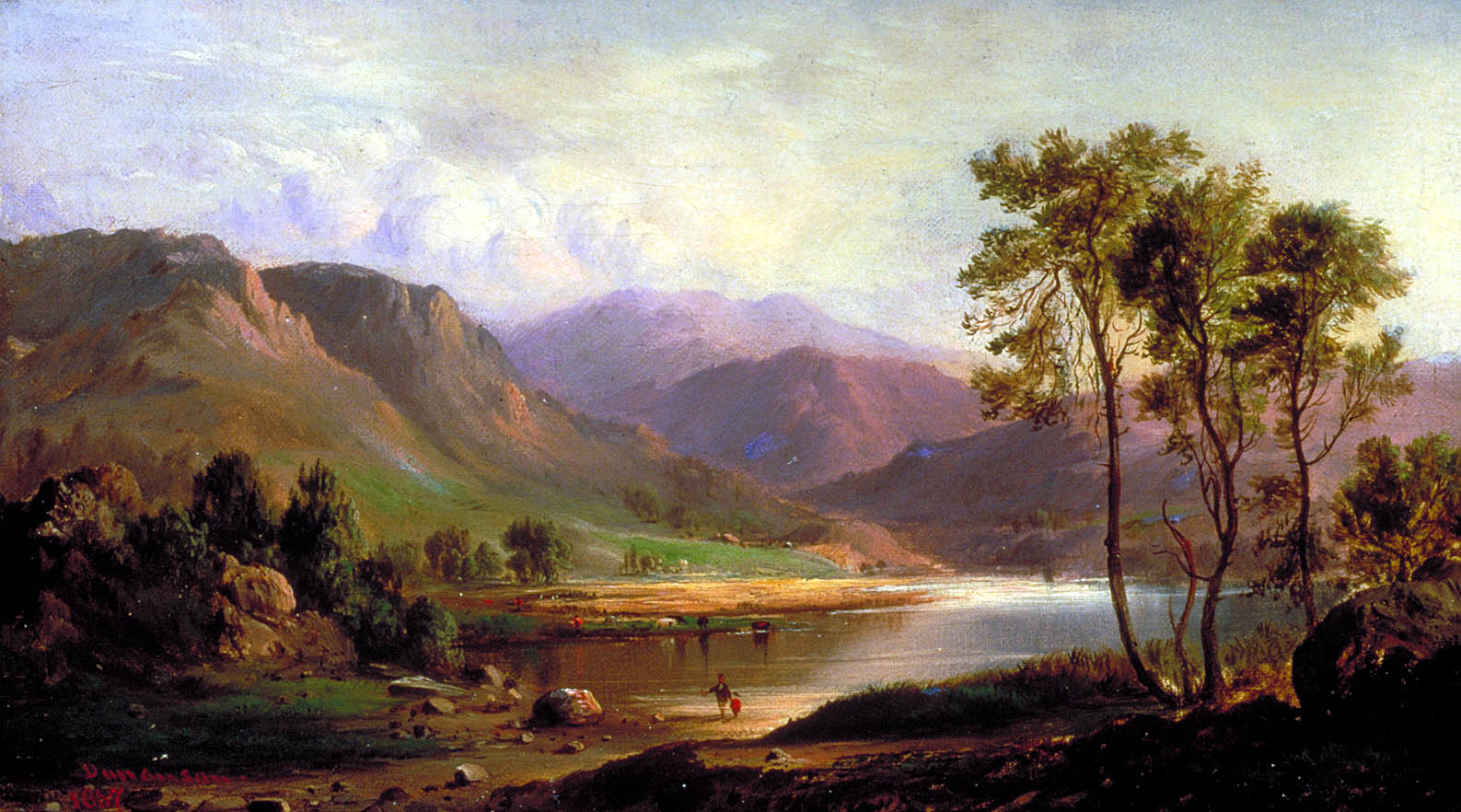
Robert S. Duncanson [Public domain], via Wikimedia Commons


     Herman Melville uses Bartleby to expose the need for changes Christian charity in the 19th century American society. That time of the history is defined by the romantic art, novels and poems. The unseemly side was hidden from view and not talked about. The accounts of charity were that handing over a few dollars to, hopefully, be rid of the needy. I believe Melville was attempting to shame society, and bring about change through exposure. Melvilles' lawyer-narrator personifies the wealthy 19th century, while Bartleby is the dark, hopelessness of the poor and sick. The narrator gains his humanity, as Bartleby loses his, in a variation of the circle of life. I believe even today we can use Bartleby, the Scrivener as an example of how to keep humanity alive.

Sunday, February 3, 2013

To Prefer or Not

To Prefer or Not

 "Imagine my surprise, nay, my consternation, when without moving from his privacy, Bartleby in a singularly mild, firm voice, replied, "I would prefer not to."(21)
 
     "I would prefer not to" (21) replies Bartleby to his employer after being asked to examine a small paper. His employer, the narrator of Bartleby, the Scrivener written By Herman Melville, was shocked when his employee of only three days refused to do what was asked of him. There is a time when we all feel like telling our employers "we prefer not to", but often we find ourselves doing what we don't like to do to keep in good standings with our boss. We often will find ourselves overworked, under- payed, and exasperated. The thought of standing up and verbalizing are thoughts, without the fear of losing our positions, would be liberating. I would prefer not to write this essay, but if I didn't I would fail and failure is not an option.We all have a choice, but there are consequence's of our decisions. Bartleby may have the power to opt out, but he was taking a great risk in doing so.  Bartleby was lucky that his employer was too stunned with his refusal to fire him.
     The phrase "I would prefer not to" is used through out the story to show Bartlby's reluctance in everything that is asked of him. His preference in; reading the copies, then writing them, leaving the office, in eating, finally his preference in living; has defined his existence. The narrator and his other employees began to use the phrase without even realizing it. Living your life without preference is not living at all. Bartleby is a great example of a person who really couldn't care less about anything.
The employer tried to help Bartleby find a new job, a new residence, and secure a good meal for him; but in the end it was Bartleby's choice and he preferred not to.
 
Ralf Roletschek [GFDL (http://www.gnu.org/copyleft/fdl.html) or CC-BY-SA-3.0 (http://creativecommons.org/licenses/by-sa/3.0/)], via Wikimedia Commons